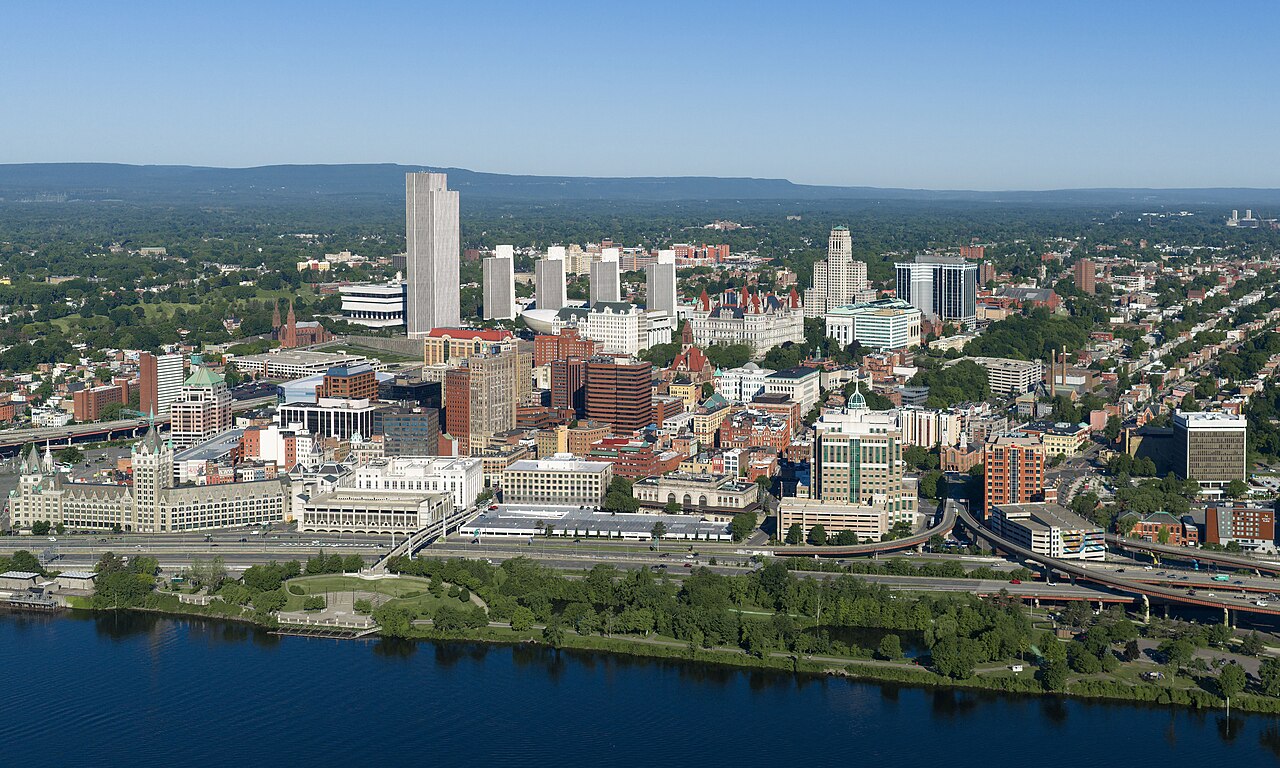
Albany, New York
Albany: runoff, sewer backups and winter-related water losses
Understand Albany's documented flood and winter-storm concerns, sewer-backup history and why property restoration must investigate more than surface wetting.
Published · Reviewed · Water Damage Dispatch
Educational guidance, not a current warning, parcel-level hazard assessment, emergency service, insurance coverage decision or guarantee of contractor availability. Follow local authorities and call 911 for immediate danger.
Property loss in Albany
Albany's local hazard work identifies flooding and severe winter storms as important concerns. A federal account of the city's planning also documents rainfall-related sewer backups, making contamination and building services central to a useful recovery discussion.
The Hudson setting does not explain every indoor loss
EPA's Albany green-infrastructure and hazard-planning report locates the city on the Hudson's west bank but also describes flood damage and sewer backups associated with local storm events. A building loss should therefore be traced to the observed route, not automatically assigned to the river. Runoff, sewer-related intrusion and a separate indoor failure can require different assessments and repair scopes.
Sources: Albany Green Infrastructure/Hazard Mitigation Planning Project
Winter weather can have flood implications
The same report identifies severe winter storms alongside flooding and notes that winter events can have flood implications. This does not establish an identical seasonal pattern at every address. It supports asking how water moves toward a property and which damaged services need qualified attention. Owners should not use weather alone to decide whether a concealed layer is dry or a system is safe.
Sources: Albany Green Infrastructure/Hazard Mitigation Planning Project
Planning updates and indoor evidence should be kept distinct
Albany County's 2025 planning material provides a wider jurisdictional context; the cited document is a draft, not a claim that every proposed action is adopted. At the building level, a restoration company can document contacted materials, moisture and cleanup progress. Those records support practical decisions for an affected household or business without substituting for current city requirements or specialist inspections.
Sources: 2025 Multi-Jurisdictional Hazard Mitigation Plan Update · Resources for Flood Cleanup and Indoor Air Quality | US EPA
Make contamination and concealed moisture explicit
An Albany assessment should establish whether the loss involved runoff, suspected sewer contact or an unrelated indoor source. Those distinctions affect contamination and material decisions. Ask how concealed wetting will be evaluated rather than relying only on a visible stain or an outside weather report.
Where services were affected, appropriate qualified assessment comes before using equipment or reopening the area. After safe entry, the restoration record should explain cleaning, removal, moisture checks and remaining repairs. It should also keep unresolved source defects visible. A draft county plan or a general climate discussion cannot decide those building-specific questions or determine a policy's response to the loss.
Sources: Guidelines for Cleaning Safely After a Disaster | Natural Disasters | CDC · Resources for Flood Cleanup and Indoor Air Quality | US EPA
If damage happens
Distinguish possible sewer contact
Keep away from suspect water and ask for an appropriate contamination assessment rather than assuming a clean-water spill.
Check safe service conditions
Arrange the relevant utility or qualified trade where systems were affected before cleanup depends on them.
Document the remaining work
Request material and moisture evidence plus a clear account of any entry defect or separate specialist repair.
Locate Albany
City-center location map only—not a flood-risk map, hazard boundary, live warning or address-specific assessment.
Official sources and review notes
Local sources establish geographic and hazard context. CDC and EPA resources provide general recovery guidance. Historical notices and draft plans are identified in the text; they are not current warnings or funding approvals.
- Albany Green Infrastructure/Hazard Mitigation Planning Project — epa.gov. Checked 2026-10-18.
- 2025 Multi-Jurisdictional Hazard Mitigation Plan Update — menandsny.gov. Checked 2026-10-18.
- Guidelines for Cleaning Safely After a Disaster | Natural Disasters | CDC — Centers for Disease Control and Prevention. Checked 2026-10-18.
- Resources for Flood Cleanup and Indoor Air Quality | US EPA — U.S. Environmental Protection Agency. Checked 2026-10-18.
Albany recovery questions
Can a weather report establish that my Albany walls are dry?
No. It describes outside conditions. Enclosed layers need observations and moisture assessment appropriate to their construction and the actual loss.
Should finishes be replaced before affected services are assessed?
Not where unresolved service hazards make the work unsafe or incomplete. Coordinate the appropriate qualified assessment with cleanup and reconstruction rather than conceal a continuing problem.
Compare listings, then confirm the fit
Browse listed companies in New York. A state listing is not proof of service at your address, an emergency dispatch promise or a coverage decision. Confirm location, services and availability directly.
Browse New York restoration companies · Regional property-damage guide