Phoenix, Arizona
Phoenix: desert runoff, monsoon openings and hidden indoor moisture
Learn why Phoenix properties can suffer flash-flood and wind-driven water losses, and how drainage review, moisture assessment and restoration fit together.
Published · Reviewed · Water Damage Dispatch
Educational guidance, not a current warning, parcel-level hazard assessment, emergency service, insurance coverage decision or guarantee of contractor availability. Follow local authorities and call 911 for immediate danger.
Property loss in Phoenix
A desert location does not make a Phoenix building immune to water damage. The useful question is how water reached the property: overland runoff, a storm-created opening, or an unrelated indoor failure. Each calls for a different repair and mitigation plan.
Flooding belongs in a desert property's planning
Phoenix's jurisdictional hazard summary includes flooding and flash-flood mapping, while the city's threats-and-hazards resources direct residents to flood and severe-weather information. An address-specific drainage review matters more than an assumption based on the region's dry appearance. If runoff has crossed a floor, technicians need to assess contamination and the extent of material contact before choosing extraction and cleaning methods.
Sources: JURISDICTIONAL SUMMARY FOR THE CITY OF PHOENIX · Threats and Hazards | City of Phoenix
Monsoon damage can connect the outside envelope to indoor losses
The city's flood-management material describes localized monsoon precipitation together with strong winds and other storm effects. When a roof covering, door seal or window assembly is damaged, rain may reach insulation or wall cavities rather than remain on visible surfaces. Weatherproofing the opening and evaluating concealed moisture serve different purposes. The appropriate trade must address the defect; restoration work should not merely conceal it.
A hot exterior is not proof of a dry wall
Extreme heat is among the hazards Phoenix identifies, but outdoor temperature cannot verify the condition of enclosed building materials. For an affected office, rental or home, moisture readings and documented progress provide a stronger basis for repair decisions than touch or appearance alone. Where cooling or safe occupancy has been interrupted, coordinating building services with cleanup also helps avoid a premature return to an uncomfortable or unsafe interior.
Sources: JURISDICTIONAL SUMMARY FOR THE CITY OF PHOENIX · Threats and Hazards | City of Phoenix
Assess the materials, not the outdoor temperature
Phoenix owners should ask the assessor to trace wetting beyond the most visible surface. Rain entering through a damaged opening can affect layers that are difficult to inspect from the room. The repair of that opening and the decision to retain or replace wet materials belong in a coordinated scope.
With runoff, the source and possible contaminants also matter. Drying alone is not a substitute for appropriate cleaning or removal. Ask for moisture observations and the basis for proceeding to reconstruction, rather than a promise based on hot outdoor weather. Electrical, structural or cooling-system problems may need separate qualified attention; their resolution should not be assumed from the appearance of a finished wall.
Sources: Guidelines for Cleaning Safely After a Disaster | Natural Disasters | CDC · Resources for Flood Cleanup and Indoor Air Quality | US EPA
If damage happens
Distinguish the water route
Describe runoff, storm-created openings and indoor failures separately so the assessment starts with the actual observed loss.
Arrange safe specialist access
Keep away from wet electrical equipment and damaged structures; involve the utility or appropriate qualified trade where necessary.
Check the repair sequence
Request documentation of affected layers, contamination decisions and drying progress before replacement finishes conceal the work.
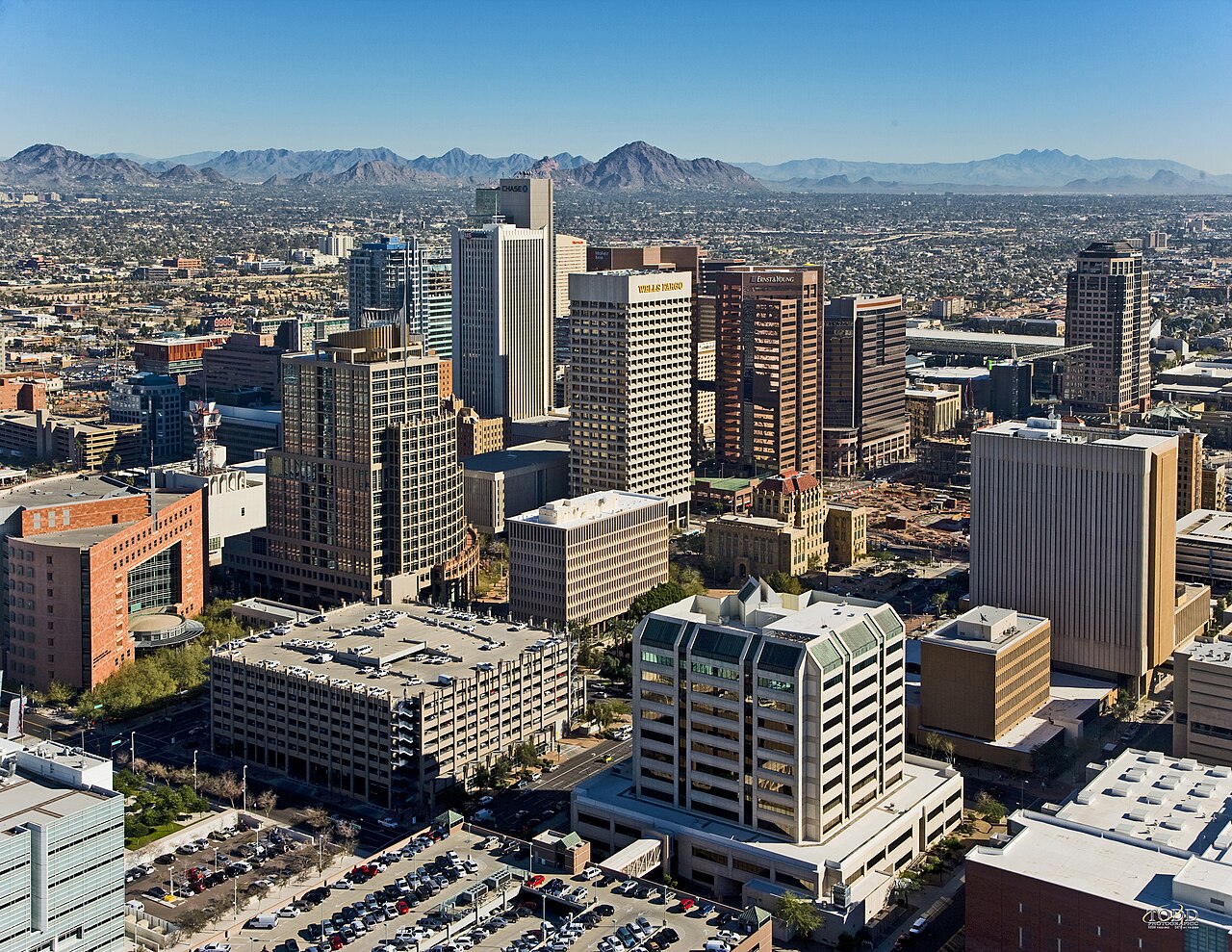
Locate Phoenix
City-center location map only—not a flood-risk map, hazard boundary, live warning or address-specific assessment.
Official sources and review notes
Local sources establish geographic and hazard context. CDC and EPA resources provide general recovery guidance. Historical notices and draft plans are identified in the text; they are not current warnings or funding approvals.
- JURISDICTIONAL SUMMARY FOR THE CITY OF PHOENIX — phoenix.gov. Checked 2026-10-18.
- Threats and Hazards | City of Phoenix — web-prod.phoenix.gov. Checked 2026-10-18.
- https://www.phoenix.gov/content/dam/phoenix/streetssite/documents/secure%20city%20of%20phoenix%20final%20fmp%20august%202016%20webversion%20%281%29.pdf — phoenix.gov. Checked 2026-10-18.
- Guidelines for Cleaning Safely After a Disaster | Natural Disasters | CDC — Centers for Disease Control and Prevention. Checked 2026-10-18.
- Resources for Flood Cleanup and Indoor Air Quality | US EPA — U.S. Environmental Protection Agency. Checked 2026-10-18.
Phoenix recovery questions
Will Phoenix heat dry the wall for me?
Outdoor heat does not establish the moisture condition of insulation or enclosed layers. Assessment and measured progress are more useful than assuming that a warm day completes indoor drying.
Does fixing a monsoon-damaged roof complete restoration?
It addresses an entry route, not necessarily everything the water contacted. The indoor scope should evaluate affected materials and contents, with repair sequencing based on their actual condition.
Compare listings, then confirm the fit
Browse listed companies in Arizona. A state listing is not proof of service at your address, an emergency dispatch promise or a coverage decision. Confirm location, services and availability directly.
Browse Arizona restoration companies · Regional property-damage guide