Water & moisture
Hidden Water Damage Behind Walls: What the Surface Cannot Tell You
Learn how hidden moisture is assessed, why a dry surface can mislead, and which questions to ask before walls and floors are closed after a water loss.
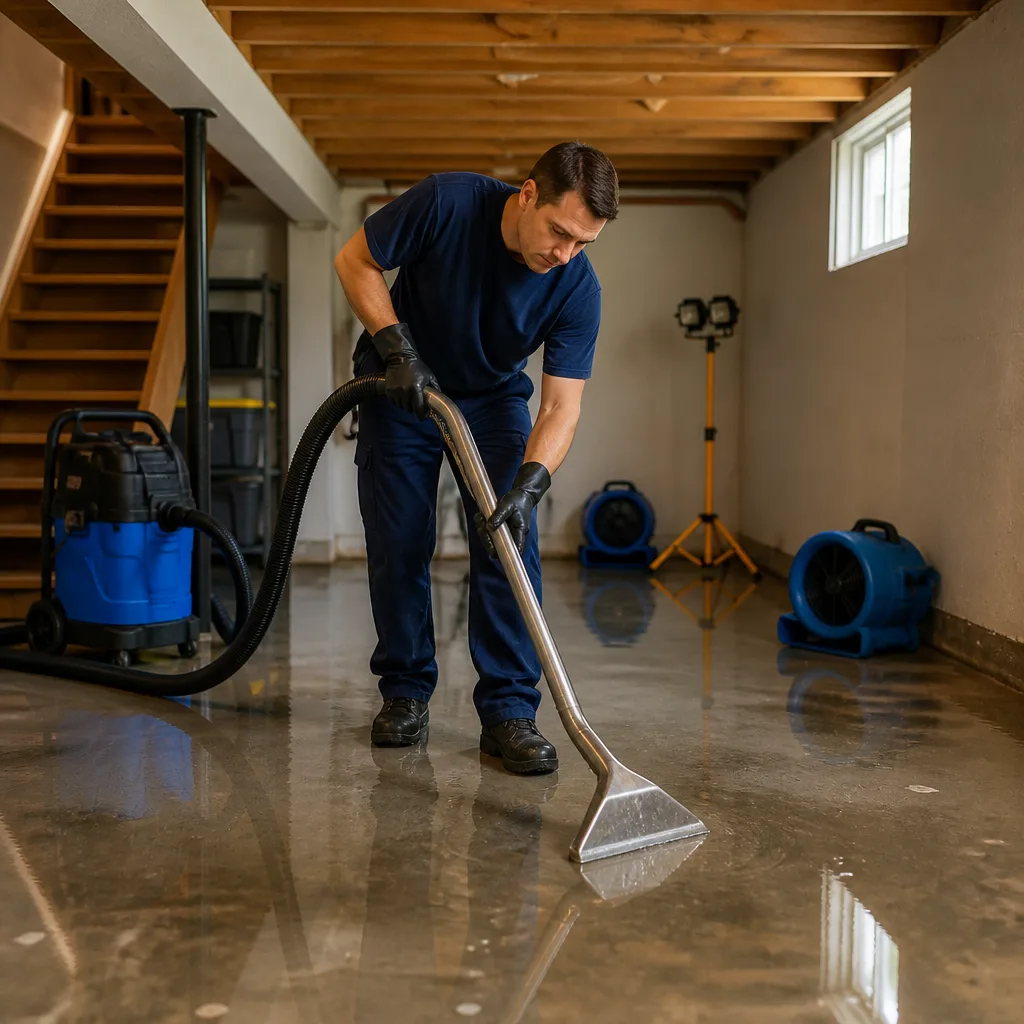
A wall can look normal while water remains inside the assembly. Paint may conceal the original stain, a room can smell better after ventilation, and the exposed floor may feel dry long before concealed layers have been evaluated. After a leak, the important question is not simply whether the puddle disappeared. It is whether the source was corrected and the affected materials were assessed, cleaned where necessary, and dried appropriately.
This article explains how to have a useful conversation about hidden moisture without trying to diagnose your home from a photograph. It is particularly relevant after an upstairs supply-line leak, an overflowing appliance, or water that traveled along a wall into another room. A site-specific inspection is still necessary; symptoms alone do not establish the extent of damage.
Key takeaways
- Surface appearance and a single meter reading are not a complete assessment.
- Ask for a documented affected-area map, material-specific readings, and a drying plan.
- Do not close assemblies until remaining moisture and contamination concerns have been addressed.
Signs worth investigating—not a diagnosis
Watch for a new musty odor, recurring discoloration, swollen trim, lifting flooring, peeling finishes, or a stain that returns after repainting. Their importance depends on the building and the event. A warped floor might reflect an old condition; a fresh stain might come from a roof rather than a pipe. Record when you first noticed the change and what happened immediately beforehand.
A useful timeline includes when water was discovered, when it was stopped, which rooms were wet, and what cleanup was already attempted. Photograph the same locations over time from a safe position. Do not press on a sagging ceiling, remove an electrical cover, or open a wall merely to investigate. Signs of structural instability, wet electrical equipment, or contaminated water call for qualified assistance rather than exploratory DIY work.
How water travels beyond the visible patch
A leak does not necessarily remain directly below its source. Water can follow framing, penetrate gaps around fixtures, collect beneath floor coverings, or reach insulation and adjoining spaces. The visible stain is therefore a starting point for assessment, not an outline of every affected material. Tell the inspector about rooms above, below, and beside the location where you first saw water.
Think in layers: a finished floor, underlayment, subfloor, and the ceiling below may have different conditions. Ask whether the assessment includes those layers or only the accessible surface. Opening an assembly may sometimes be appropriate, but the decision should consider contamination, electrical and structural risks, and possible hazardous materials in older construction. A thermal image can help identify areas to investigate; it is not, by itself, proof of water behind a wall.
What a useful moisture assessment should explain
Ask the restoration provider to show which materials were examined, where readings were taken, what equipment was used, and how the findings were interpreted. Moisture instruments vary; a number should be understood in relation to the material, the instrument, and an appropriate comparison area. A reading without a location or material description is difficult to use later.
For example, an assessment can identify the affected kitchen wall, the adjoining cabinet base, and the room below, with dated observations at each location. Ask about inaccessible areas and the limits of the inspection. An honest report can state that a concealed space has not yet been evaluated. That is more useful than presenting a broad reassurance based only on an accessible wall surface.
- Where did water enter, and has that source been repaired or isolated?
- Which accessible and concealed materials may be involved?
- Which findings support drying, removal, or further investigation?
- What will be recorded at the next visit, and what will trigger a change in the plan?
Drying is a monitored process, not an equipment count
Extraction addresses free water; drying addresses moisture remaining in materials. Fans and dehumidifiers are tools, not a guarantee of completion. Ask what the proposed equipment is intended to accomplish, how the environment will be monitored, and how the provider will determine when each affected area is ready for the next step. Occupancy, access, power availability, construction details, and the nature of the water can all influence the plan.
EPA advises acting quickly and drying water-damaged items within 24–48 hours to help prevent mold growth. That is a prevention goal, not a promise that every building assembly becomes dry within two days or that later drying makes contaminated materials safe. If mold or sewage is involved, blowing air indiscriminately can create additional concerns. EPA's flooded-home guidance specifically cautions against using fans when mold has already begun growing until visible mold is cleaned.
When removal or specialist assessment becomes part of the job
Some materials cannot be adequately cleaned and dried in place. EPA notes that moldy porous materials, including ceiling tiles and carpet, may need disposal. CDC advises removing drywall and insulation contaminated by sewage or floodwater. These are not instructions to cut into your own walls: contamination, utilities, structural conditions, and hazardous materials must be considered before disturbance.
Ask for a reason when removal is proposed and for an explanation when preservation is proposed. The question is not which approach is automatically cheaper. It is whether the method addresses the actual condition and leaves a documented basis for repair. If an estimate expands after a cavity is opened, request photographs, findings, and a written change in scope before approving additional nonemergency work.
Before insulation, flooring, and finishes go back
Before reconstruction hides the work, ask for a completion record describing the source correction, affected locations, removal and cleaning decisions, and final observations or measurements. Ask the provider to explain the acceptance criteria in ordinary language. There is no universal moisture percentage that this article can supply for every wall, wood product, flooring system, or instrument.
Confirm who is responsible for the transition to reconstruction. The drying contractor and repair contractor may be different businesses, and neither should assume the other has checked an unresolved area. Save reports, invoices, photographs, and warranties together. After repairs, revisit the original locations for new staining, odors, or finish changes; recurrence deserves investigation rather than another coat of paint.
Frequently asked questions
- Does a dry-feeling wall mean the inside is dry?
- No. Touching the surface does not evaluate concealed layers. Ask for a material-specific assessment and an explanation of how inaccessible areas were considered.
- Can a thermal camera prove hidden water damage?
- An image may identify temperature differences that warrant investigation, but it does not independently prove the presence, source, or extent of moisture. Ask how observations were confirmed.
- Should I run household fans after every leak?
- Not automatically. Electricity, contaminated water, suspected mold, and the building's conditions matter. Keep away from hazards and ask a qualified provider about a safe plan.
Sources and further reading
- EPA: A Brief Guide to Mold, Moisture and Your Home
- EPA: Flooded Home
- CDC: Guidelines for Cleaning Safely After a Disaster
Independent educational articles based on linked public guidance. Not a property inspection, medical advice, or an insurance coverage determination. Confirm conditions with qualified professionals and your insurer. Illustrative images do not depict listed providers or customer projects.
Take the next step
Confirm services, current coverage, credentials, and availability directly with the company.
Compare water damage companies