Water moves fast. Make the next step a safe one.
A leak or overflow can affect more than the wet spot you can see. First protect people, then identify whether the source can safely be stopped. Documentation and a clear drying plan help turn a chaotic first hour into manageable decisions.
General education, not a site assessment or insurance determination. Keep away from electrical, structural, and contaminated-water hazards and follow qualified instructions.
Stop the source only when it is safe
If a fixture or appliance is leaking and its shutoff is accessible without entering water or approaching an electrical hazard, closing that valve may limit additional damage. For a main shutoff, use it only if you can reach it safely and know how. If the leak involves gas, damaged wiring, ceiling movement, or an unsafe area, leave and call the appropriate emergency or utility service.
Never step into standing water where outlets, cords, electrical panels, or appliances may be energized. Do not operate wet electrical equipment or attempt an improvised electrical shutdown. Keep people and pets away until the hazard has been assessed by qualified responders.
- Do not enter water with a possible electrical hazard.
- Avoid damaged ceilings, sagging floors, and unstable materials.
- Call emergency services or the utility for immediate danger.
The water source changes the response
A clean supply-line leak is different from water that has contacted sewage, chemicals, soil, or floodwater. The source and the path through the building determine contamination concerns; water that looks clear is not proof that it is safe. Keep away from contaminated water and avoid handling wet porous materials without professional direction.
Photograph the source and water line only from a safe location. Note when the leak began, which rooms are affected, whether water reached cabinets or wall cavities, and any odor or visible debris. This information helps a company describe its proposed work and helps your insurer understand the event.
Drying is about hidden materials, too
Water can travel beneath flooring, into wall cavities, insulation, and the spaces around cabinetry. A dry-looking surface does not confirm that the assembly underneath is dry. Prompt drying matters because prolonged dampness can damage building materials and create conditions for mold growth; EPA advises drying water-damaged areas and items within 24–48 hours when possible. That is guidance, not a guaranteed deadline or a promise that every material can be saved.
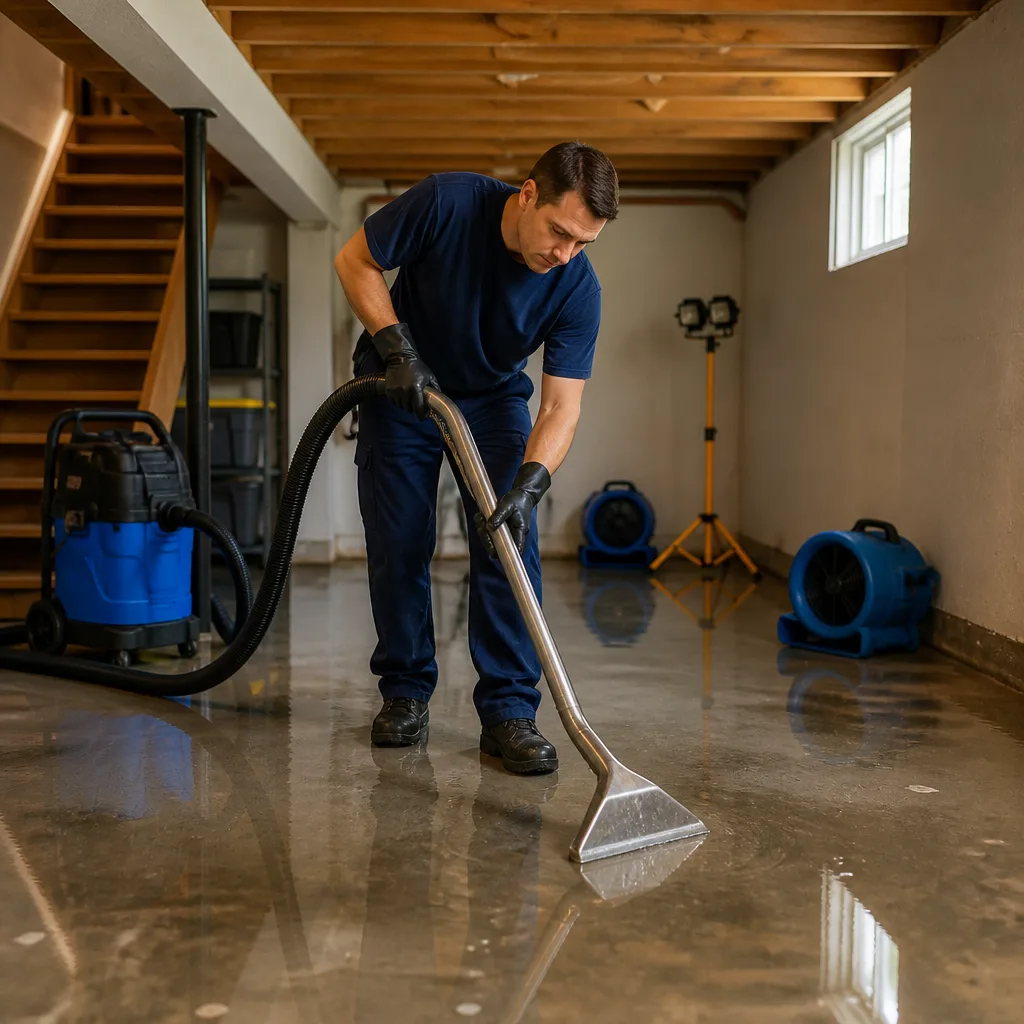
A restoration assessment may map affected areas, identify materials to remove or retain, extract water, set drying equipment, and monitor conditions. Ask what measurements will be taken, where readings will be documented, and what findings would change the plan. Do not run equipment or enter a hazardous area simply to meet a clock.
- Ask what is wet beyond the visible surface.
- Request readings and progress records as part of the scope.
- Do not assume one drying schedule fits every home.
When a restoration company may help
Consider professional help when multiple rooms are involved, water reached drywall or insulation, the source is unknown, materials remain damp, or contamination is possible. Ask whether the company handles the type of work you need, who will perform it, what equipment and containment are planned, and what the estimate includes. Verify local licensing and insurance independently.
A sound proposal separates mitigation from reconstruction where relevant, explains what is excluded, and says how the company will seek approval for extra work. Compare scope and documentation, not just an arrival estimate or a verbal promise.
- Compare written scopes for extraction, affected materials, and monitoring.
- Ask how work changes will be documented and approved.
Photograph, save receipts, notify your insurer
Take dated photos or video before moving items when safe. Keep a list of damaged belongings and save receipts for emergency supplies, temporary repairs, and mitigation. Contact your insurer promptly to ask about inspection, emergency work, documentation, and claim procedures. Keep estimates, invoices, moisture records, and written approvals together.
Policies differ. Coverage can depend on the source, exclusions, limits, maintenance facts, and endorsements. A contractor cannot promise coverage and the directory does not adjudicate claims. Ask your insurer before discarding property or committing to non-emergency work, without delaying actions needed to protect people.
Frequently asked questions
- Can I turn off the electricity in a flooded room?
- Do not enter standing water or touch electrical equipment to do so. Keep clear and contact the utility, emergency responders, or a qualified electrician for safe instructions.
- How quickly should wet materials dry?
- EPA advises drying water-damaged areas and items within 24–48 hours when possible to help prevent mold growth. This is not a guarantee; source, material, and conditions matter.
- Can I keep carpet after a leak?
- It depends on the water source, depth, duration, backing and padding, and the material's condition. Ask a qualified restoration professional and your insurer before deciding.
- Will my homeowners policy cover a leak?
- Coverage varies by policy, cause, exclusions, and claim facts. Contact your insurer and document damage and expenses; no provider can guarantee a coverage decision.