Floodwater is not just a cleanup problem.
The water may recede before the risks do. Wait for official permission to return, keep clear of floodwater and damaged utilities, and do not rush into pumping or demolition. Safety and a careful record come before salvage.
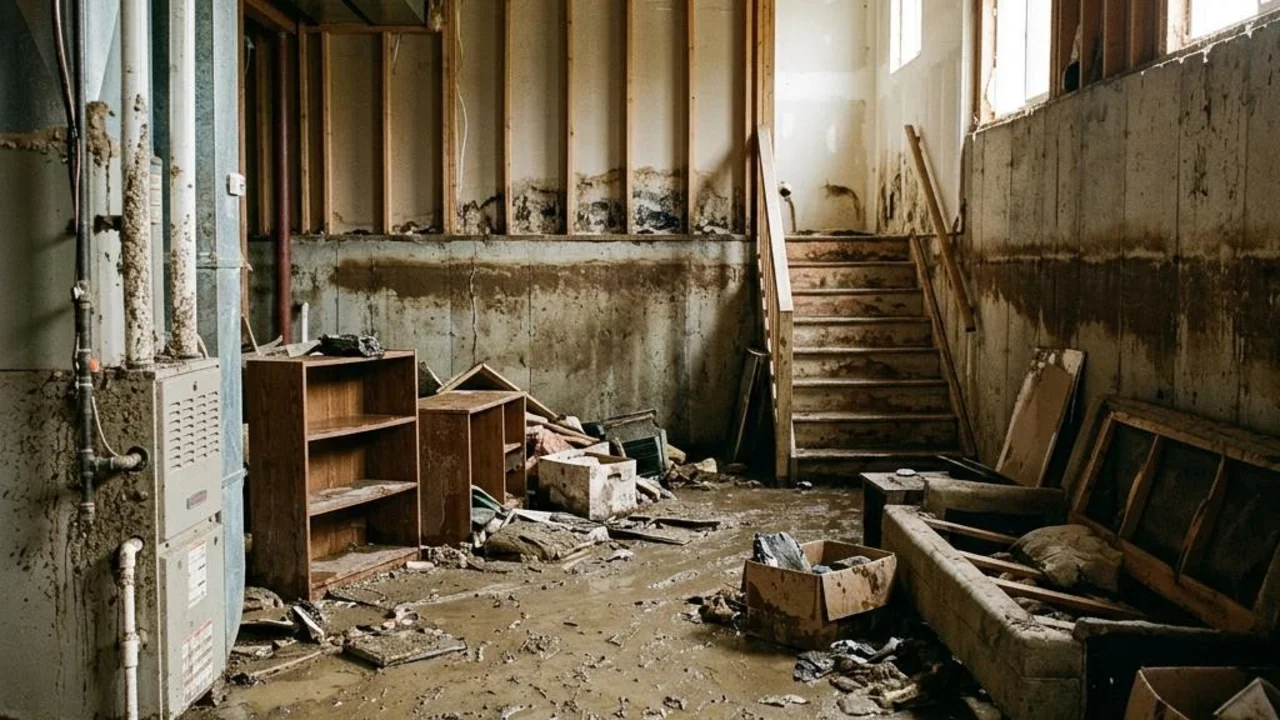
Follow local emergency instructions. This guide is not a sanitation assessment, electrical advice, structural inspection, or insurance coverage determination.
Do not drive or walk through floodwater
Ready.gov's instruction is direct: do not walk, swim, or drive through floodwaters. Water may be deeper or faster than it appears and can conceal open drains, debris, damaged pavement, wildlife, sewage, chemicals, or downed power lines. Obey barricades and emergency instructions. Return only when local authorities say it is safe.
If a building is surrounded or water is rising, follow emergency guidance and call for help rather than attempting a crossing. Once access is allowed, look for visible hazards from outside. Do not touch electrical equipment if it is wet or you are standing in water; leave electrical assessment and any shutoff decisions to qualified people.
- Never enter, walk, or drive through floodwater.
- Stay away from wet electrical equipment, downed lines, and unstable structures.
- Follow local reentry and water-use advisories.
Assume floodwater may be contaminated
Floodwater can carry sewage, animal waste, chemicals, fuel, and sharp debris, even when it looks clear. Do not handle wet contents or porous materials without appropriate precautions and professional direction. Keep children and pets away from affected rooms. People with asthma, lung conditions, or immune suppression should avoid buildings with indoor water leaks or visible or smelled mold, consistent with Ready.gov guidance.
Do not use food, medicine, or personal-care products that contacted floodwater unless public-health authorities say they are safe. Follow local drinking-water advisories and ask officials how to clean or discard specific items. This guide cannot determine whether a room or possession is sanitary.
Do not rush into unsafe pumping or demolition
A flooded basement, compromised foundation, or unstable structure can make water removal hazardous. Do not enter to operate a pump or begin demolition when electrical, structural, contamination, or water-pressure hazards may be present. Wait for official clearance and qualified assessment; the safe method and sequence depend on the building and site conditions.
Avoid running gasoline-powered equipment indoors or near windows. Ask the restoration company to describe the source and contamination assumptions, how it will protect occupants, what materials may be removed, and how water removal and drying will be monitored. Never accept a universal schedule without an assessment.
What to ask a flood restoration company
Flood restoration can involve water extraction, removal of contaminated or unsalvageable materials, cleaning, drying, and repairs. The scope depends on water source, depth, duration, affected construction, and local health guidance. Ask whether the company has experience handling the type of contaminated water involved and whether any additional trades or inspections are needed.
Get an itemized written scope that states affected areas, containment or protective measures, disposal plan, equipment, monitoring records, exclusions, and change-order approval. Check licenses and insurance directly. Directory listings can help you compare reported water-damage services but do not establish flood-specific qualifications or availability.
- Compare written scopes for extraction, contaminated materials, and monitoring.
- Ask how the company handles the particular water source and disposal requirements.
Document the loss and check the right policy
After authorities permit safe access, photograph water lines, rooms, exterior conditions, and damaged contents before cleanup where possible. Keep an inventory, receipts, estimates, invoices, and any readings or disposal records. Notify your insurer promptly. Ask whether you should contact a separate flood policy administrator and what evidence it requires.
Flood coverage and standard homeowners coverage are not interchangeable. Policy language, cause, exclusions, limits, and event facts govern; do not assume a policy covers flood damage or rely on a contractor to interpret it. Ask the insurer before discarding items when practical, while prioritizing health and safety.
Frequently asked questions
- Is floodwater safe once it looks clear?
- Appearance cannot establish that water is safe. Floodwater may contain sewage, chemicals, debris, or other hazards; follow authorities and qualified cleanup guidance.
- Can I pump out my flooded basement right away?
- Do not enter or pump when electrical, structural, contamination, or pressure hazards may exist. Follow official instructions and get a qualified assessment of the site first.
- Can I drive through a shallow flooded road?
- No. Ready.gov says not to drive or walk through floodwater; depth and road conditions are difficult to judge and moving water can sweep vehicles away.
- Does homeowners insurance cover flood damage?
- Coverage depends on your policy and the loss. Flood coverage may be separate; contact your insurer or policy administrator and preserve documentation.