After the fire, safety comes before cleanup.
When the flames are out, the home may still hold structural, electrical, smoke, and chemical hazards. Give responders room to assess it. Once officials say it is safe, a calm record of what happened can make the next decisions clearer.
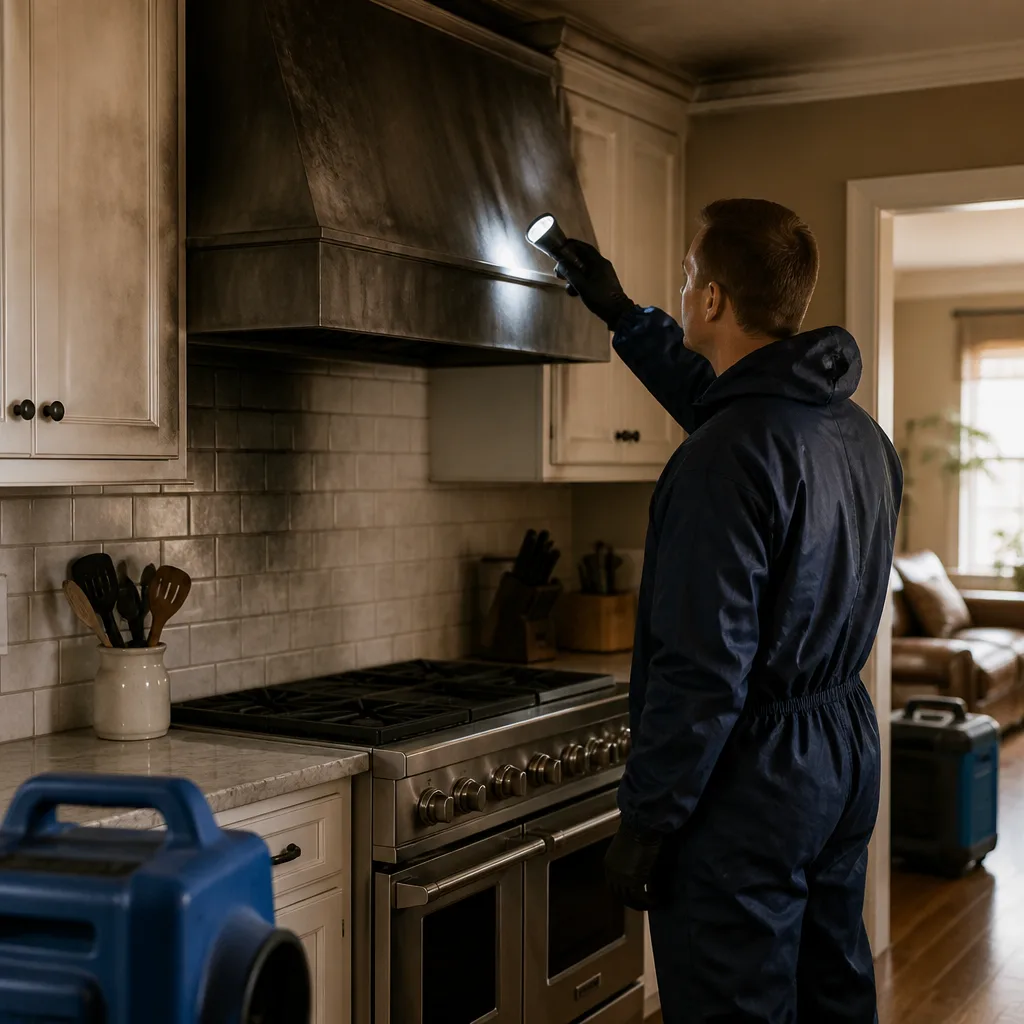
General information only. Do not enter until authorities clear the property; follow official safety instructions and your insurer's claim process.
Do not re-enter until officials clear it
A darkened room can conceal weakened floors, unstable ceilings, hot spots, damaged wiring, gas leaks, or contaminated debris. Ask the fire department or local building official when and where entry is permitted, and follow any posted restrictions. Do not turn utilities back on or reconnect equipment yourself; fire damage can leave systems unsafe even when they look intact.
If authorities have not cleared the building, stay out. If you are allowed a brief supervised entry, wear the protection officials recommend, do not touch suspicious material, and leave if you smell gas, see shifting debris, or encounter unexpected damage. Use emergency services for immediate hazards, not a restoration crew.
- Wait for fire officials or building authorities to authorize reentry.
- Do not reconnect utilities or operate damaged appliances.
- Keep children and pets away from debris and restricted areas.
Soot is not ordinary household dust
Smoke can move beyond the visibly burned room. Fine soot and residues may settle on surfaces, enter contents, and leave odor in porous materials. Fire suppressants and damaged building products can add another layer of residue. Avoid dry sweeping, household fans, or casually wiping surfaces if that may spread contamination or alter evidence.
Do not use food, medicines, cosmetics, or opened personal-care products exposed to smoke, heat, or firefighting chemicals without appropriate guidance. Ask local public-health officials, your insurer, or a qualified restoration professional how to handle specific items. People with respiratory symptoms should seek medical care; this guide cannot assess exposure or health effects.
Make a careful record before things move
Once safe, photograph each room and damaged item from more than one angle. Make a room-by-room inventory, including approximate age, make, model, and purchase information where available. Keep damaged goods until they have been inventoried and your insurer has given instructions, unless an immediate safety or sanitation issue requires removal.
Save receipts for temporary lodging, meals, supplies, and other fire-related spending. Keep a copy of the incident number, official notices, contractor estimates, and all insurer communications. The insurer may have specific procedures; ask before discarding items or starting non-emergency work.
- Photograph before cleanup or disposal.
- Save receipts and a copy of each estimate.
- Ask the insurer how to handle damaged contents and emergency work.
Compare a written fire-restoration scope
A fire restoration company may assess the affected areas, protect the site, remove debris or unsalvageable material, clean soot from appropriate surfaces and contents, address odor, and coordinate drying or repairs where firefighting water was used. The work varies with the fire, materials, suppression method, and authority requirements; a visual visit cannot promise that all hidden damage has been found.
Ask which rooms and contents are included, what cleaning method is proposed for each material, how items will be inventoried, what work requires a separate trade or permit, and how added scope is approved. Confirm who handles disposal and what documentation you receive. Check local credentials and insurance directly.
- Compare the proposed room-by-room cleaning and contents plan.
- Confirm the company documents exclusions and asks before expanding the scope.
Coverage depends on your policy and the loss
Tell your insurer about the fire as soon as practical and ask about emergency mitigation, inspections, contents inventory, and deadlines. Keep communications in writing when possible. Coverage and reimbursement are determined by the policy and claim facts, not by this directory or a contractor; do not assume a quoted scope is automatically approved.
If the home is not habitable, ask officials about safe temporary accommodation and contact community disaster-relief services if needed. A restoration company can document work it performs, but it cannot decide your coverage or replace a public safety inspection.
Frequently asked questions
- When can I go back inside after a fire?
- Only after the fire department or relevant local authority says entry is safe and any restrictions are clear. Structural and utility hazards may remain after flames are out.
- Can I clean soot with a household vacuum?
- Do not assume ordinary household cleaning is safe or suitable; wiping and vacuuming can spread residue or affect contents. Ask your insurer and a qualified fire-restoration professional about the material and situation.
- Should I throw away damaged belongings?
- Inventory and photograph items first when safe, and ask your insurer for instructions. Immediate hazards may require different action; preserve records and receipts.
- Does homeowners insurance cover all fire damage?
- Coverage depends on the specific policy and loss facts, including limits and exclusions. Your insurer can explain the claim requirements; no directory listing can guarantee coverage.