Mold is a moisture problem first.
Seeing mold can feel alarming. The useful first question is not its color or a home test result; it is where moisture is coming from and whether the affected area can be handled safely. This guide helps you choose a measured next step.
General educational information, not medical, legal, engineering, or insurance advice. Follow local authorities and qualified professionals for site-specific decisions.
Start with the water, not the stain
Mold needs moisture. A roof leak, plumbing drip, condensation, appliance overflow, or damp basement can keep feeding growth even after a surface is wiped. If the source is still active, arrange a safe repair; cleaning visible growth without correcting the moisture invites a return. Do not open wet walls or disturb suspect material just to see how far it goes.
If water is near outlets, wiring, or equipment, keep out and have the hazard assessed by the appropriate utility or qualified professional. If the area is safe to approach, take dated overview and close-up photographs before moving belongings. Note when you first noticed dampness, any leak history, and rooms or items affected.
- Look for the moisture source and whether it is ongoing.
- Avoid disturbing hidden or widespread growth.
- Keep people away from active leaks and electrical hazards.
A useful EPA size distinction
EPA says that in most cases a homeowner can handle a moldy area smaller than about 10 square feet—roughly a 3-by-3-foot patch—using its cleanup guidance. This is a general reference, not a guarantee that a particular cleanup is safe. Extensive water damage, growth larger than that, contaminated water, or suspected HVAC involvement are reasons to consult an experienced remediation professional.
Porous items such as carpet, ceiling tile, and some wall materials can hold growth in spaces that are difficult to clean completely; removal may be considered. A contractor should explain containment, what will be cleaned versus removed, how the water source will be fixed, and how completion will be evaluated. Ask for the work plan in writing rather than relying on a vague promise to make the home mold-free.
- EPA's small-area reference: under about 10 sq. ft. in most cases.
- Ask for professional help for larger areas, extensive water damage, contaminated water, or possible HVAC contamination.
- Do not paint or caulk over visible mold before cleanup and drying.
Protect people; do not self-diagnose
Mold exposure can irritate some people or trigger allergic-type symptoms, but appearance alone cannot identify a species or predict an individual's health response. This page is not medical advice or a diagnosis. If anyone has symptoms or a health concern, contact a health professional; people with asthma, lung conditions, or immune suppression should avoid entering visibly or strongly musty water-damaged spaces and follow public-health advice.
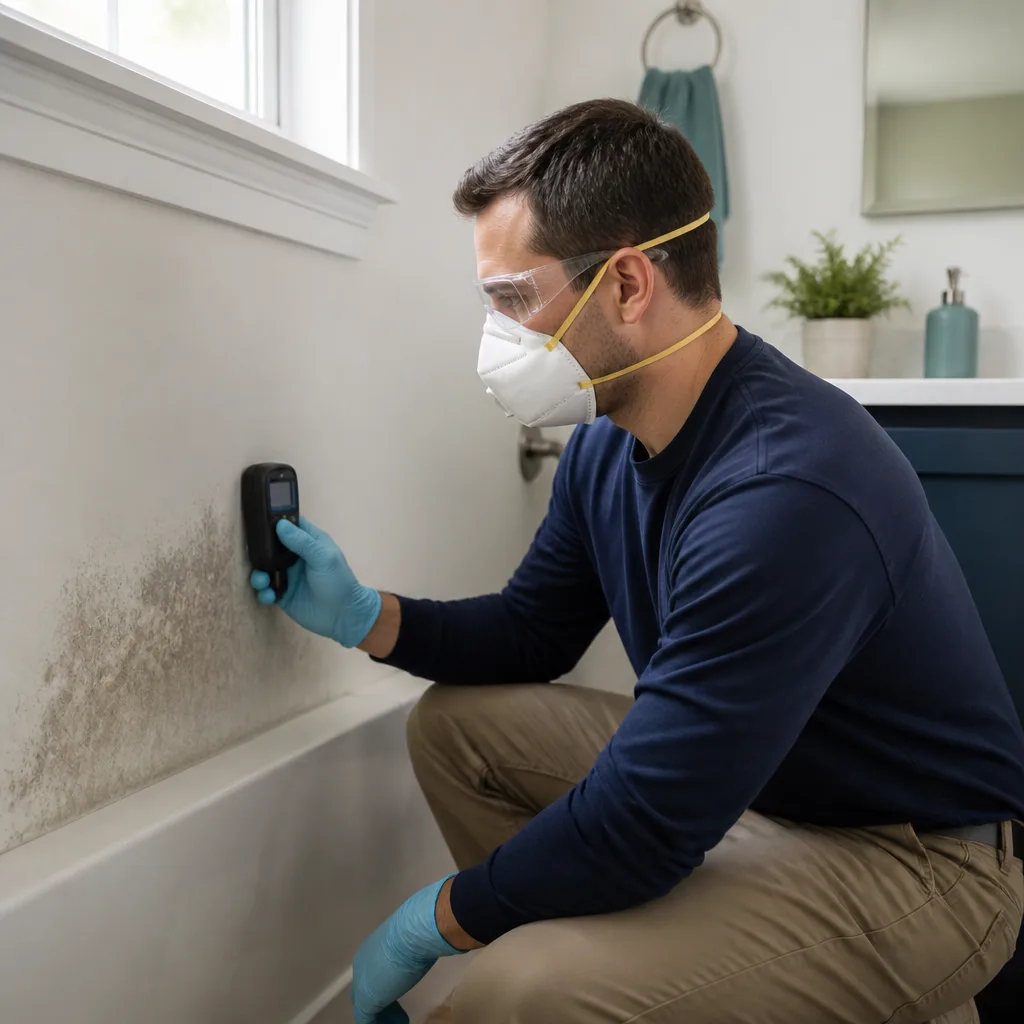
For a small cleanup you decide is appropriate, EPA recommends precautions to limit exposure, including gloves, goggles, and a properly fitted N-95 respirator. Avoid dry brushing or actions that spread dust. Do not run an HVAC system if you know or suspect it is contaminated; seek qualified guidance.
What a remediation visit should clarify
A useful assessment connects the visible condition to a moisture source and checks plausible hidden wet materials without turning the inspection into a diagnosis of health risk. Before authorizing work, ask who will perform it, what containment and cleaning approach is proposed, which items may be discarded, how the underlying moisture will be corrected, and what records you will receive. Verify any local licensing or insurance requirements yourself.
The sequence commonly includes controlling the leak, isolating work where appropriate, removing or cleaning affected materials, drying the structure, and checking the agreed work area. The proper scope depends on construction, water history, and what is found; neither a universal timeline nor a guaranteed result is realistic. Compare written scopes and ask how changes and additional charges are approved.
- Compare written scopes for cleanup, moisture correction, and follow-up records.
- Confirm the proposed work matches the affected materials and the water source.
Keep a record; let your policy decide coverage
Photograph damage before cleanup when safe, save invoices and receipts, and keep copies of inspection notes and the written scope. Notify your insurer promptly and ask what documentation, mitigation steps, and approval process it requires. Coverage depends on the policy, cause, exclusions, limits, and facts; a contractor or directory cannot determine whether a claim is covered.
Do not delay urgent safety measures while waiting on a coverage answer, but preserve removed materials or samples only if your insurer asks and it is safe. The directory helps compare companies and listed services; it does not inspect, endorse, or guarantee a provider.
Frequently asked questions
- Does black mold always mean a special hazard?
- Color cannot identify mold type or establish a health diagnosis. Focus on controlling moisture and safe cleanup; consult a health professional for symptoms and an experienced remediator for larger or complex damage.
- Can I clean a small patch myself?
- EPA says areas under about 10 square feet can in most cases be handled by homeowners following its guidance. Extensive water damage, contaminated water, HVAC concerns, or personal health concerns change the decision.
- Should I test the air before hiring?
- EPA notes there are no federal mold-spore limits and sampling is often unnecessary when visible growth is present. Ask what question a proposed test would answer and discuss health concerns with a clinician.
- Will insurance pay for mold remediation?
- There is no universal answer. The policy, cause of moisture, exclusions, limits, and claim facts control. Contact your insurer and document the damage and expenses.