Phoenix property recovery should not start with the assumption that desert heat will dry everything. Water can remain inside assemblies after a supply-line leak, and storm runoff brings a different set of cleanup decisions. This city page connects official Phoenix flood resources with published restoration contacts and detailed comparison questions. It also distinguishes a Phoenix service area from an operator's actual Tempe, Gilbert or Mesa office, so local search does not come at the expense of accurate business information.
5 published profiles. Editorial selection, not a paid placement, ranking, verified quality claim or guarantee of availability. Nearby office municipalities are preserved. Confirm service to your address directly.
Zona Restoration publishes its Tempe office on West 10th Place and describes recovery work throughout the Phoenix area. Its service range includes water, fire, mold and specialist cleanup with construction support. The listing retains the real office municipality, giving Phoenix owners a regional contact without presenting service coverage as proof of an additional physical branch.
Services: Water damage, Fire and smoke, Mold remediation, Biohazard cleanup, Reconstruction
Listing source: Official local company contact and service information reviewed
Lotus Restoration Services identifies its Gilbert base on North McQueen Road and explicitly serves the Phoenix metro. Published specialties span water recovery, fire cleanup, mold and biohazard-related work. Its office contact is useful for discussing contamination and contents considerations alongside wet construction, with the Gilbert location preserved rather than converted into a Phoenix street address.
Services: Water damage, Fire and smoke, Mold remediation, Biohazard cleanup
Listing source: Official local company contact and service information reviewed
911 Restoration of Phoenix publishes a North Central Avenue contact and separate pages addressing wet buildings, mold removal and fire cleanup. The branch information gives owners a local identity to use when requesting a loss-specific assessment. Marketing assurances about speed or satisfaction are not reproduced as facts; the appropriate scope and current availability should be confirmed directly.
Services: Water damage, Fire and smoke, Mold remediation
Listing source: Official local company contact and service information reviewed
RestoreMaster's local website places the business on East Roeser Road and describes Phoenix-area water mitigation with fire and mold recovery. The published material explains a progression from water removal into addressing remaining environmental concerns. This profile identifies the Arizona operator specifically, avoiding confusion with similarly named national referral websites or unrelated roofing companies.
Services: Water damage, Fire and smoke, Mold remediation
Listing source: Official local company contact and service information reviewed
Titan Restoration of Arizona lists its Mesa office on East Redmont Circle and describes restoration serving the Phoenix market. Reconstruction joins the company's advertised fire cleanup, mold remediation and water recovery. The Mesa contact is kept separate from Titan's other Arizona branches and from unrelated businesses using the Titan name, allowing owners to compare a specific operating location.
Services: Water damage, Fire and smoke, Mold remediation, Reconstruction
Listing source: Official local company contact and service information reviewed
Use Phoenix's floodplain and monsoon resources for the real address
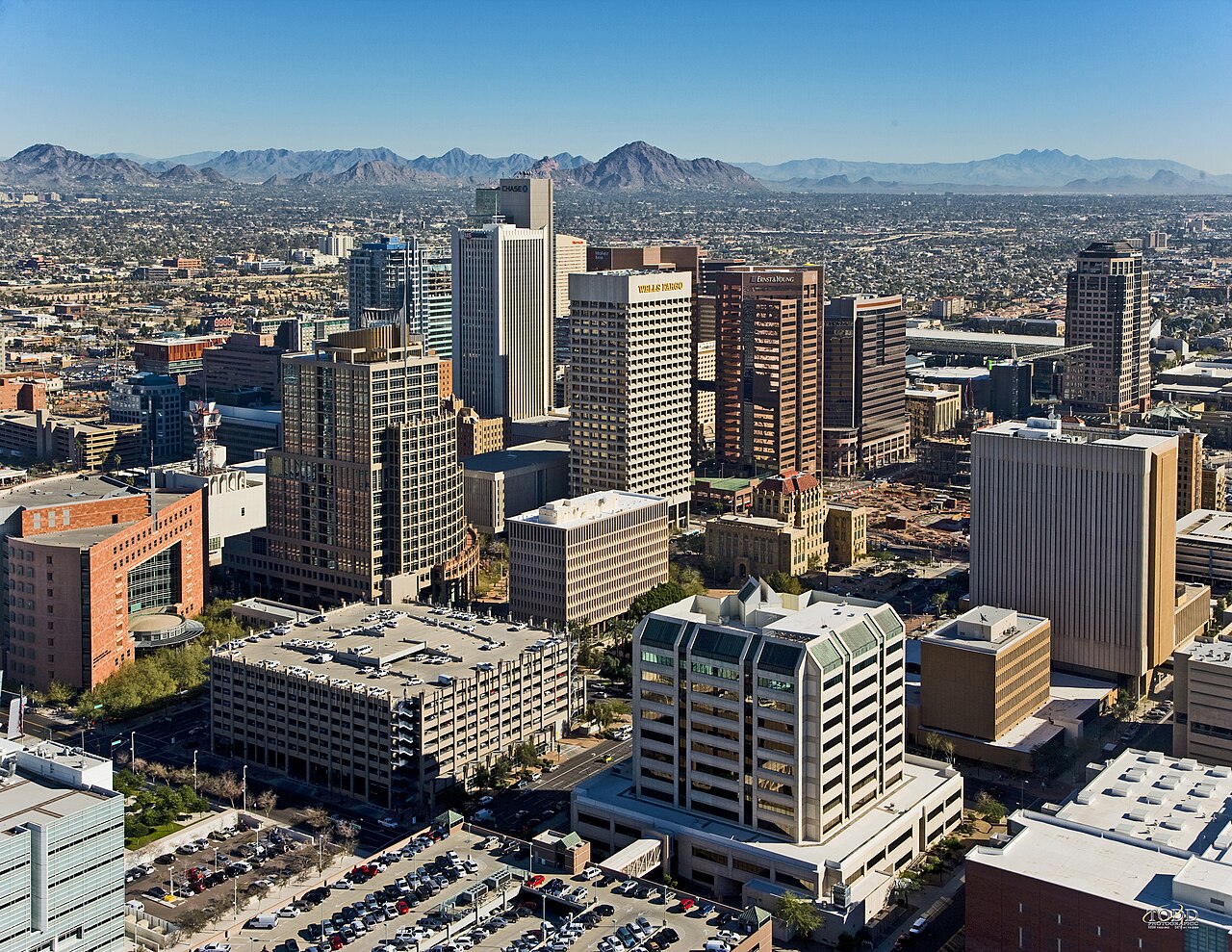
Phoenix participates in the National Flood Insurance Program and publishes floodplain-management information, elevation-certificate resources and monsoon safety links. Use those public tools to investigate a specific parcel; neither a skyline photograph nor a city-center map establishes the condition of a particular lot.
After outside water intrusion, note whether water traveled through a yard, street or drainage feature. That history should be part of the contractor's assessment of contamination and materials. Follow local warnings, and never cross a flooded roadway to inspect a property or reach a restoration appointment.
Indoor drying is a measurement problem, not an outdoor-temperature shortcut
A wet cabinet base, enclosed wall or floor assembly can retain moisture independently of afternoon weather. Ask for a material-specific assessment, a monitoring schedule and written criteria for completion. A surface that feels dry should not be the only evidence used before finishes are replaced.
For a plumbing or appliance loss, identify who stops and repairs the source before drying begins. Ask whether adjacent rooms, hidden layers or inaccessible spaces need evaluation. The scope should explain the purpose of proposed openings and distinguish necessary removal from unrelated remodeling.
Treat smoke, contents and rebuilding as connected but distinct work
Once emergency officials release the scene, request a plan for building surfaces and belongings. Contents moved for cleaning or storage should be inventoried, and disposal should require the owner's approval. Preserve the record of the original loss instead of allowing removal to precede documentation.
Ask how the company will address soot, odor and damaged materials, and whether reconstruction is part of the same contract. Electrical systems and structural concerns may require other qualified professionals. A complete estimate should identify responsibilities rather than relying on a list of services copied from a website.
Persistent moisture deserves an explanation even in an arid region
When growth or odor appears near an earlier leak, tell the assessor about the previous repair and any recurring dampness. The restoration plan should address the moisture source and affected material, not simply conceal a stain. Ask how the work area will be controlled and unaffected space protected.
The appropriate scope depends on the extent of contamination, the materials involved and occupant circumstances. Seek qualified advice for extensive damage or uncertain indoor conditions. This page does not provide a building clearance or medical assessment, and a directory listing does not establish those outcomes either.
Coordinate equipment and access before work disrupts an occupied property
For a Phoenix home, plan safe routes around drying equipment, cables and work zones. For a retail or office loss, identify secure areas, inventory concerns and the hours when crews can gain access. Explain these constraints when requesting an assessment rather than after the scope has been authorized.
Ask who monitors the job and how changes will be communicated if concealed damage is discovered. Keep temporary stabilization, cleaning, drying and reconstruction separately understandable. Material replacement should follow documented assessment and any needed trade inspections, not simply a promised completion date.
A Valley service area is not a separate office in every city
Several established restoration operators serve Phoenix from other Valley municipalities. The highlighted profiles retain their recorded office locations and published contacts. Compare what the business says it handles and confirm dispatch to the exact property; a metro-area listing is not evidence of an office in your neighborhood.
Before authorizing work, request the charging basis for equipment and monitoring, the approval process for extra work and the handling of contents or storage fees. Discuss coverage directly with your insurer. Contractor assistance with documentation does not guarantee policy benefits or payment of every proposed repair.
Give the dispatcher the water's observed source and whether it is still entering. Do not enter energized water or drive through flooding to reach the property.
Photograph the visible path
Record affected rooms, entry points and belongings from a safe place. Keep earlier leak repairs or recurring stains in the information supplied to the assessor.
Ask for measured drying
Require an explanation of initial moisture readings, equipment placement and monitoring. Do not substitute Phoenix's outdoor heat for evidence about enclosed materials.
Document the decision to rebuild
Get the completion record and proposed repair scope before new finishes conceal the affected assembly. Confirm responsibilities for specialist work, permits and insurance communication.
Phoenix city locator and official hazard resources
This map identifies the city center. It is not a parcel-level flood map, company-office marker or coverage boundary. Use the official sources below to investigate the property.
Will Phoenix heat dry a concealed wall after a leak?
Do not assume it will. Enclosed assemblies can remain wet; ask for material-specific measurements, monitoring and documented completion.
Why do some Phoenix contacts list offices in other Valley cities?
A company can document Phoenix service while operating from Tempe, Gilbert or Mesa. This directory preserves the published locality rather than inventing another physical branch.
Where are official Phoenix flood and monsoon resources?
The City of Phoenix floodplain-management page below links local flood information and monsoon resources. Use the actual property address and current official warnings; the embedded city map is for orientation only.
Educational information, not a live warning, emergency service, parcel assessment, insurance decision or contractor endorsement. Follow local officials and call 911 for immediate danger.
Published 2026-10-18 · Editorial review 2026-10-18.
Dedicated city restoration pages
Local recovery context, official resources, photographs and selected company contacts.